Showing posts with label links. Show all posts

Saturday, October 19, 2013

linkses

Jeanette Winterson on Oscar Wilde's fairy tales:

Wilde had a streak of prophecy in him. The children's stories can be read as notes from the future about Wilde's fate. It is as though the little child in him was trying to warn him of the dangers his adult self would soon face. "Every single work of art is the fulfilment of a prophecy", he writes in "De Profundis".

(One of the few good things about the mysteriously-DOA Wilde starring Stephen Fry was its framing device, voiceover narration from "The Selfish Giant."  Intriguingly, Wilde's wife Constance might have helped write it.)


Her Brilliant Career: Ten Extraordinary Women of the Fifties by Rachel Cooke:

So, though we're used to reading about the lives of the great artists, writers and thinkers, this book is not about them. On the other hand, though we're increasingly drawn to what Woolf called "infinitely obscure lives" that "remain to be recorded", this is not a project of recovery. The idea, appealingly, is to think about women who became well-known for being terrifically good at what they did. They were professional pioneers of the 1950s, respected by their peers and remembered admiringly, perhaps not by millions, but certainly by those working in related fields. They were all career women when that was rare, and today's working women are in their debt.


Prehistoric cave prints show most early artists were women. A friend of mine dryly commented that now of course various scientists and art critics will re-evaluate the cave drawings as lesser -- or, dare we say, even as "chicks sitting around thinking about how they feel about their relatives"?


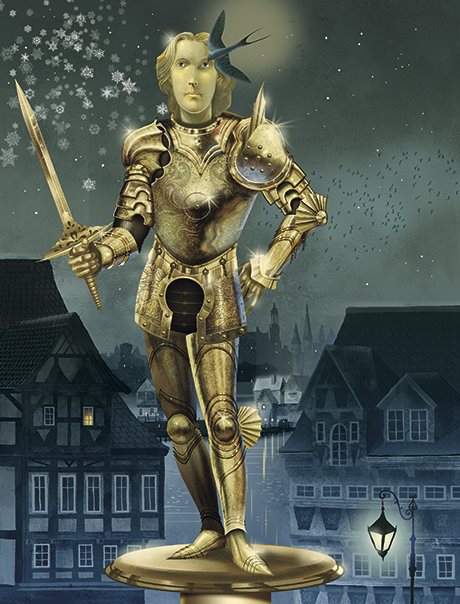
That Winterson piece also has a gorgeous illustration of Wilde as his fairytale character the Happy Prince by Grahame Baker-Smith:


And a late-breaking addition: We also had, on Gloucester Road, a Partridge’s store that sold all the American foods I missed: Skippy peanut butter, Toll House chocolate chips, breakfast cereals consisting mostly of fluorescent marshmallows. 

are you fucking kidding me

(Best dry comment: "I still say that Americans should be given a simple test before they are issued a passport. If peanut butter is essential to their well-being, they (and the host country) would be a lot happier with their staying home.")

#seriously #are you kidding me #oh my God you went to London #and ate peanut butter #and got paid by the NYT to write about it #so angry resorting to hashtags #Tumblritis

Saturday, October 12, 2013

linkses

Trying to start dropping links here, with commentary, that would otherwise go on Twitter or Tumblr or GoodReads without. Trying to quit all those things.

Daniel Mendelsohn (I have such a crush on him) on translation: 'When David R. Slavitt chose to pepper his 1997 translation of this titanic masterpiece with phrases like “learning curve,” “stress-related” and “Watch what you say, mister,” he was not only cheapening the diction but hamstringing the play’s larger meanings. Clytemnestra is not Joan Crawford.' (My mind went to a scary place there.) (Now could Agamemnon, drama queen extraordinaire, be Joan Crawford? Possibly.)

The Atlantic rehashes a 2001 interview with Alice Munro, 2013 Nobel winner (yay!), in which she sounds a lot like Raymond Carver in "Fires":

So why do I like to write short stories? Well, I certainly didn't intend to. I was going to write a novel. And still! I still come up with ideas for novels. And I even start novels. But something happens to them. They break up. I look at what I really want to do with the material, and it never turns out to be a novel. But when I was younger, it was simply a matter of expediency. I had small children, I didn't have any help. Some of this was before the days of automatic washing machines, if you can actually believe it. There was no way I could get that kind of time. I couldn't look ahead and say, this is going to take me a year, because I thought every moment something might happen that would take all time away from me. So I wrote in bits and pieces with a limited time expectation. Perhaps I got used to thinking of my material in terms of things that worked that way. And then when I got a little more time, I started writing these odder stories, which branch out a lot. But I still didn't write a novel, in spite of good intentions.

 Also yay! -- the 18th annual Seattle Lesbian & Gay Film festival, featuring a movie about one of my very favourite poets, Elizabeth Bishop. There's also a documentary about Divine, and an adaptation of Michelle Tea's memoir Valencia.

"I heard back from a law firm whose name seemed to come straight out of a Shel Silverstein poem: Solheim, Billing, and Grimmer": it sounds like Shel Silverstein's estate could teach Sylvia Plath's heirs lessons. More seriously, this is another demonstration of the clash between property rights and scholarship. He mentions this Atlantic article on how copyright is making mid-twentieth-century books disappear.

Malcolm Gladwell sucks. Yes, yes he does. I enjoyed a lot of his early New Yorker articles, but oh my GOD, enough with the "You may think X is X. But actually, it's Y!" pop books.

Why is Michiko Kakutani a top literary critic again? Is she better or worse than Dwight Garner? Now there's a real tossup.

Remember Helvetica, one of the best docs ever? The guy who made it is doing a Kickstarter to publish the complete transcripts of his "design trilogy." That sounds pretty damn awesome to me.

Someone's rewritten Hamlet as a Choose Your Own Adventure book!  I used to love those things as a kid. (True to my obsessive nature, I would read them all the way through to figure out how they were structured.) I doubt it's as completely awesome as Robin Johnson's wonderful Hamlet text adventure, tho. (I also have to love Johnson's background image on his Twitter.)

William Todd Schultz on "Why We Can't Get Elliott Smith Out of Our Heads":  "He did it all. There were no limits. That's what great artistic striving is: oceanic." His biography of Elliott, Torment Saint, is very good.

And last, some Rob Brezsny: SCORPIO (Oct 23–Nov 21): Two years ago, a British man named Sean Murphy decided he had suffered enough from the painful wart on his middle finger. So he drank a few beers to steel his nerves and tried to blast the offending blemish off with a gun. The operation was a success in the sense that he got rid of the wart. It was less than a total victory, though, because he also annihilated most of his finger. May I suggest that you not follow Murphy's lead, Scorpio? Now is a good time to part ways with a hurtful burden, but I'm sure you can do it without causing a lot of collateral damage.

.....oh, FUCK YOU, Rob, LET'S SEE YOU DISENGAGE IF IT'S SO DAMN EASY. ahem.

Monday, September 23, 2013

links

Grauniad Poem of the Week: "To Autumn," John Keats
All of Keats's Odes abound in mythical beings. There are the three urn-figures of "Indolence" (Love, Ambition and Poesie), the eponymous "Psyche" and "Melancholy", the "light-winged Dryad" of "Nightingale", and the "marble men and maidens" in "Grecian Urn". Like Ambition and Poesie, the addressee of "To Autumn" may be allegorical, Keats taking his cues not only from Spenser's "Mutabilitie" cantos, but from Chatterton's "Ælla: A Tragicall Interlude", both of which feature a male Autumn.

Stephen King on alcoholism and returning to the Shining
It also captures the reality of a recovering alcoholic, a state with which King is intimately familiar. "The hungover eye," he writes, "had a weird ability to find the ugliest things in any given landscape." Danny turns his life around and starts going to AA meetings, where, King writes, he discovers that memories are the "real ghosts". It is a book as extravagantly inventive as any in King's pantheon, and a careful study of self-haunting: "You take yourself with you, wherever you go."

Kelly Clarkson gives up Jane Austen's ring
Mary Guyatt, curator of Jane Austen's House Museum, said: "We have been stunned by the generosity and light-footedness of all those who have supported our campaign to meet the costs of acquiring Jane Austen's ring for our permanent collection. Visitors come from all around the world to see the house where she once lived, and we will now take great pleasure in displaying this pretty ring for their appreciation."

Thursday, June 13, 2013

literary links (staying AWAY from Tumblr)

Elizabeth Showalter on captivity narratives: Although modern Gothic novels narrated by psychopathic men, like John Fowles’s thriller “The Collector” (1963), have inspired actual crimes, the genre of the captivity narrative is very different. Rather than focusing obsessively on women’s helplessness, sexual vulnerability and terror, these books are testaments to women’s courage, resourcefulness and strength.

The Great (Gay) Novelist You’ve Never Heard Of: Great war novels inevitably follow great wars, and in literary circles following World War II, everyone was wondering what would be the successors to “A Farewell to Arms” and “All Quiet on the Western Front” — and who would write them. But when John Horne Burns, age 29, in his small dormitory suite at the Loomis School in Windsor, Conn., on the night of April 23, 1946 (Shakespeare’s birthday, at that), finished “The Gallery” — “I fell across my Underwood and wept my heart out,” he later recalled — he was convinced he had done just that, and more. “ ‘The Gallery,’ I fear, is one of the masterpieces of the 20th century,” he wrote a friend. 

Invisible Men: GUANTÁNAMO BAY, Cuba — The prison library here is housed in a prefabricated building behind chain-link fencing and razor wire inside Camp Delta, an older, largely disused wing of the complex. Inside, the place has the feel of a branch library, with several rooms of books divided by language and genre — but its patrons may not browse the stacks. Instead, the chief librarian, a civilian who asks to be identified as “Milton” for security reasons, or an aide fills plastic bins with about 50 books and takes them to each cellblock once a week. If they obey prison rules, the 166 detainees may peer at the spines through the slots in their doors and check out two titles at a time, or make specific requests.

Tuesday, June 4, 2013

literary links (get thee behind me, Tumblr!)

Original Forbes article that inspired Let Us Now Praise Famous Men published by Melville House: “With the book, we have a much better map of him writing ‘Let Us Now Praise Famous Men,’ “ said John Summers, who edited “Cotton Tenants” and printed an excerpt from the article in a literary journal he edits, The Baffler. I grew up on Famous Men, it was actually one of my childhood picturebooks. I'm totally going to buy this.

The riddle of the labyrinth: Ms. Fox is attentive to touching traces of idiosyncratic humanity, past and ancient: The church pamphlets and library slips Kober cut up to serve as index cards during the paper shortages of World War II; the “scribal doodles” — a bull, a man, a maze — found on the tablets; the mark a Cretan scribe made when erasing a character on wet clay with his thumb all those centuries ago. “To look at the tablets even now is to be in the presence of other people — living, thinking, literate people,” she writes.  I think I'm going to read this next, I already love Alice.

William Denby dead at 90: He once told The Bloomsbury Review that he recognized his uncertain standing among some critics. “I believed, as I still do, that a black writer has the same kind of mind that writers have had all through time,” he said. “He can imagine any world he wants to imagine.” 

TLS review of the Annotated Frankenstein. ....Wolfson and Levao show that the first edition of Frankenstein of 1818 was packaged as a philosophic novel. Published anonymously, and dedicated to William Godwin, it features more references to the Prometheus legend and Paradise Lost than to such Gothic tropes as perverse sexuality and spectral hauntings. The monster may be stitched together from human and animal parts, yet he is more memorable for being an autodidact who pleads for affection: “his humanity is the most surprising, most disturbing, and ultimately most moving aspect of his character”. I NEED this book....yes! Yes I do. 

Thursday, March 14, 2013

Linkses!

The Infinite Jest liveblog
(Ah, the end of IJ. "I threw the book across the room!" "It was like waiting for your friend to give you a dead arm and instead taking a brick to the face." Or simply, "AAAAAARRRRRGGGHHHH.")

(You wanna know what the end of IJ means? I studied conic geometry and calculus a little at SJC, so I can actually tell you. IT'S A TANGENT. No, that's not a joke. Go look it up.)

Salinger's early Holden Caufield stories. Hmm, the book is a buck-ninety-nine? I might get this.

Interview with Anne Carson! sort of. Her emails sound brilliant.

Fuck yeah Tin House and Granta. They will be getting some of my money.