
descensus Averno facilis est
Wednesday, August 21, 2013
the last night at the fair, or, meta is murder
I have scientific evidence it is impossible to be unhappy while listening to this song.
Tuesday, August 20, 2013
Sunday, August 18, 2013
Saturday, August 17, 2013
North Star
I heard the North Star sayin'
"Kid, you're so lost
Even I can't bring you home"
Probably a terrible, no good, very bad, un-mentally-hygienic idea to listen to this at quarter past 4 AM after a shitty, shitty day, but it's just so beautiful, particularly that warbling, wobbly guitar line that takes over at about 1:40 in.
I didn't know how blue I'd get
I didn't know how I'd be blamed for it
I didn't choose to go down this road
No one chooses to be sick....
"Kid, you're so lost
Even I can't bring you home"
Probably a terrible, no good, very bad, un-mentally-hygienic idea to listen to this at quarter past 4 AM after a shitty, shitty day, but it's just so beautiful, particularly that warbling, wobbly guitar line that takes over at about 1:40 in.
I didn't know how blue I'd get
I didn't know how I'd be blamed for it
I didn't choose to go down this road
No one chooses to be sick....
that wine-dark sea (from lycanthropia)
....on close inspection, Homeric terms that appear to describe the color of the sea, have more to do with light. The sea is often glaukós or mélas. In Homer, glaukós (whence glaucoma) is color neutral, meaning “shining” or “gleaming,” although in later Greek it comes to mean “gray.” Mélas (whence
melancholy) is “dark in hue, dark,” sometimes, perhaps crudely,
translated as “black.” It is used of a range of things associated with
water—ships, the sea, the rippled surface of the sea, “the dark hue of
water as seen by transmitted light with little or no reflection from the
surface.” It is also, as we have seen, commonly used of wine.
So what color is the sea? Silver-pewter at dawn; gray, gray-blue, green-blue, or blue depending on the particular day; yellow or red at sunset; silver-black at dusk; black at night. In other words, no color at all, but rather a phenomenon of reflected light. The phrase “winelike,” then, had little to do with color but must have evoked some attribute of dark wine that would resonate with an audience familiar with the sea—with the póntos, the high sea, that perilous path to distant shores—such as the glint of surface light on impenetrable darkness, like wine in a terracotta vessel. Thus, when Achilles, “weeping, quickly slipping away from his companions, sat /on the shore of the gray salt sea,” stretches forth his hands toward the oínopa pónton, he looks not on the enigmatic “winedark sea,” but, more explicitly, and possibly with more weight of melancholy, on a “sea as dark as wine.”
- Caroline Alexander
(I find Lapham's deeply, utterly annoying but I went out and bought the Sea issue just on the strength of this essay.)
So what color is the sea? Silver-pewter at dawn; gray, gray-blue, green-blue, or blue depending on the particular day; yellow or red at sunset; silver-black at dusk; black at night. In other words, no color at all, but rather a phenomenon of reflected light. The phrase “winelike,” then, had little to do with color but must have evoked some attribute of dark wine that would resonate with an audience familiar with the sea—with the póntos, the high sea, that perilous path to distant shores—such as the glint of surface light on impenetrable darkness, like wine in a terracotta vessel. Thus, when Achilles, “weeping, quickly slipping away from his companions, sat /on the shore of the gray salt sea,” stretches forth his hands toward the oínopa pónton, he looks not on the enigmatic “winedark sea,” but, more explicitly, and possibly with more weight of melancholy, on a “sea as dark as wine.”
- Caroline Alexander
(I find Lapham's deeply, utterly annoying but I went out and bought the Sea issue just on the strength of this essay.)
Friday, August 16, 2013
Thursday, August 15, 2013
Reading....Thursday! well, we're getting there....
What did you just finish reading?
A rather miscellaneous stew -- Angels & Insects, by A.S. Byatt: loved the second novella, was left cold by the first one.
Fraud, by David Rakoff, which struck me the way all his books do: sharply amusing in a very 'This American Life' way, great in a few spots, but why is everyone else shouting about it -- what did I miss?
Hurry Down Sunshine, which I apparently liked a lot more than other people on GoodReads did, but it was nothing spectacular -- more really solid. It was good enough for me to order his book on being a writer in New York, though, so that's pretty good. [Later note: that book was also solid -- and even more obviously a collection of columns, but full of great characters and keen observation. I'd love to read a New York novel of Greenberg's.]
What are you reading now?
This Magic Mountain thing is....not going well. I hate to wash out of ANOTHER big group read (Proust, Infinite Jest, Buddenbrooks, need I go on....?) but for one thing the subtle yet increasing depiction of illness as psychosomatic and patients as lazy is starting to get to me in a triggery way, as I heard that constantly about my depression (and insomnia, anxiety, phobias, &c &c) (and even actual physical problems -- "There's no reason for you to feel numbness in your fingers!" Two years later: near-incapacitating RSI). SIGH.
Also the translation is bugging the crap out of me. This is partly because it was super-hyped and given all kinds of awards and people trashed it at the expense of the Evil Lady Translator (no no, not Garnett: another one) but a lot of it is just so grating it yanks me out of the book. Examples (from the Vintage paperback):
-- For a break I turned to Michael Cox's The Meaning of Night, which is like a great big Magic Mountain 'torte with layers of just about everything -- macaroon, buttercream, chocolate, fruit jam, and marzipan' as Victorian pastiche -- murder! whores! bibliomania! secret heirs! forgery! grand estates! Sort of like the Libba Bray books, but with less Mary Sues and more fucking. No no, the prose style is much better than Libba Bray (OK that's not saying anything. Cox is a great hand at Victorian pastiche, let's say that, and I am a terrible snob about that very thing, so it's good). Cox is lengthier than even most of the Victorian writers, tho -- the love interest just entered three hundred pages in. For all that, it's about the same length as Magic Mountain and I think I'm going to finish it much more quickly (or indeed, finish it at all, hah). Expected nothing more out of it than great entertainment, and it is living up to that expectation superbly.
What do you expect to read next?
I might continue to take a break from MM because I'm at that point where just reading it is annoying me and preventing me from connecting with the book. Dan Beachy-Quick's A Brighter Word than Bright: Keats at Work just arrived, which does look spectacular, and is probably about a thousand times more sensible about illness and creativity than Mann, to boot. I also got some le Fanu and Vernon Woods free from Gutenberg, that's that Le Guin translation of the stories about fantastic cities, the Cox sequel The Glass of Time, Wolf Solent, so on and on....
A rather miscellaneous stew -- Angels & Insects, by A.S. Byatt: loved the second novella, was left cold by the first one.
Fraud, by David Rakoff, which struck me the way all his books do: sharply amusing in a very 'This American Life' way, great in a few spots, but why is everyone else shouting about it -- what did I miss?
Hurry Down Sunshine, which I apparently liked a lot more than other people on GoodReads did, but it was nothing spectacular -- more really solid. It was good enough for me to order his book on being a writer in New York, though, so that's pretty good. [Later note: that book was also solid -- and even more obviously a collection of columns, but full of great characters and keen observation. I'd love to read a New York novel of Greenberg's.]
What are you reading now?
This Magic Mountain thing is....not going well. I hate to wash out of ANOTHER big group read (Proust, Infinite Jest, Buddenbrooks, need I go on....?) but for one thing the subtle yet increasing depiction of illness as psychosomatic and patients as lazy is starting to get to me in a triggery way, as I heard that constantly about my depression (and insomnia, anxiety, phobias, &c &c) (and even actual physical problems -- "There's no reason for you to feel numbness in your fingers!" Two years later: near-incapacitating RSI). SIGH.
Also the translation is bugging the crap out of me. This is partly because it was super-hyped and given all kinds of awards and people trashed it at the expense of the Evil Lady Translator (no no, not Garnett: another one) but a lot of it is just so grating it yanks me out of the book. Examples (from the Vintage paperback):
Hans: "The hair and the nails keep on growing, and for that matter, in terms of the chemistry and physics, or so I've heard, it's a regular hustle and bustle there inside." p 69 (this all the moreso because Joachim goes on about how whacky a term "hustle and bustle" is)It's annoying to read people trashing (Helen) Porter when I keep tripping over those OH I SAY OLD FELLOW HOW TOPPING word choices. I get the feeling Woods is trying to take something colloquially German and (badly) rendering it in equivalent English. Everyone sounds super-British, and it's super-annoying because this translation is supposed to be so up-to-date and fresh and elegant and pithy and non-archaic and whatever. (I was so annoyed by the translation apparently I moved other people on GoodReads to be more defensive of it. IT'S A GIFT, I TELL YOU.) (It's not just when Hans talks, either, as someone there said: a nurse says "Twiddle-twaddle!" Surely, surely, there must have been some better twentieth-century English equivalent of whatever that was. And then, 'hustle and bustle' made A RETURN APPEARANCE, man, I was not happy. I'm guessing it's some kind of German rhyming phrase -- maybe like 'tohu-vohu' in Hebrew? But hustle and bustle? This won like every major translation award. Hustle and bustle.)
"But then what he said about human dignity, afterwards, it sounded so spiffing, like formal oratory." p 62
"'Tweet!' she whistles at me -- what a harum-scarum! What absolute devil-may-care.'" p 50
"He had held the customs of his forefathers and their old institutions in far higher regard than any expansion of the harbor at breakneck speed or the godless tomfooleries of a great city" p 23
"'She calls it a stirletto -- isn't that capital!'" p 15
"'Yes, it's top-notch, your having come'" p 14
"'Fumigated, that's spiffing'" p 11
-- For a break I turned to Michael Cox's The Meaning of Night, which is like a great big Magic Mountain 'torte with layers of just about everything -- macaroon, buttercream, chocolate, fruit jam, and marzipan' as Victorian pastiche -- murder! whores! bibliomania! secret heirs! forgery! grand estates! Sort of like the Libba Bray books, but with less Mary Sues and more fucking. No no, the prose style is much better than Libba Bray (OK that's not saying anything. Cox is a great hand at Victorian pastiche, let's say that, and I am a terrible snob about that very thing, so it's good). Cox is lengthier than even most of the Victorian writers, tho -- the love interest just entered three hundred pages in. For all that, it's about the same length as Magic Mountain and I think I'm going to finish it much more quickly (or indeed, finish it at all, hah). Expected nothing more out of it than great entertainment, and it is living up to that expectation superbly.
What do you expect to read next?
I might continue to take a break from MM because I'm at that point where just reading it is annoying me and preventing me from connecting with the book. Dan Beachy-Quick's A Brighter Word than Bright: Keats at Work just arrived, which does look spectacular, and is probably about a thousand times more sensible about illness and creativity than Mann, to boot. I also got some le Fanu and Vernon Woods free from Gutenberg, that's that Le Guin translation of the stories about fantastic cities, the Cox sequel The Glass of Time, Wolf Solent, so on and on....
Tuesday, August 13, 2013
Monday, August 12, 2013
from "The Book of Disquiet," Fernando Pessoa
I read and am liberated. I acquire objectivity. I cease being myself and so scattered. And what I read, instead of being like a nearly invisible suit that sometimes oppresses me, is the external world’s tremendous and remarkable clarity, the sun that sees everyone, the moon that splotches the still earth with shadows, the wide expanses that end in the sea, the blackly solid trees whose tops greenly wave the steady peace of ponds on farms, the terraced slopes with their paths overgrown by grape-vines.
quoted in the GoodReads Thomas Mann reading group
DAVID WOLF: You don’t often write very negative reviews these days but
it seems to me those that you have written—such as of House of Exile by
Evelyn Juers or The House of Wittgenstein by Alexander Waugh—share a
theme. In a number of these cases you seem frustrated that the writer is
condescending to history or judging figures of the past
anachronistically. Do you think that’s a fair observation?
ADAM KIRSCH: I can see what you mean about those reviews. I think that one thing literature can do is make you aware that the past is just as real as the present was to the people who were living it. You have to try to understand it, rather than merely making it serve purposes for the present. There has to be certain humility before the past. I particularly remember that with House of Exile, which is ostensibly a biography of Thomas Mann’s brother Heinrich, the author was simply scolding Thomas Mann—asserting that he wasn’t up to scratch, that he wasn’t nice enough. I think that with a writer like that—and Mann is one I particularly love—you have to approach with a sense of humility and willingness to be instructed rather than to just pass judgement.
via
ADAM KIRSCH: I can see what you mean about those reviews. I think that one thing literature can do is make you aware that the past is just as real as the present was to the people who were living it. You have to try to understand it, rather than merely making it serve purposes for the present. There has to be certain humility before the past. I particularly remember that with House of Exile, which is ostensibly a biography of Thomas Mann’s brother Heinrich, the author was simply scolding Thomas Mann—asserting that he wasn’t up to scratch, that he wasn’t nice enough. I think that with a writer like that—and Mann is one I particularly love—you have to approach with a sense of humility and willingness to be instructed rather than to just pass judgement.
via
Sunday, August 11, 2013
'This is Davos-Dorf'
Finally began The Magic Mountain. I read Master and Margarita a couple of years ago, and Anna Karenina the year before that. EXCELLENT WELL, at this point I shall have read my way through the canon of classic literature by the time I'm one hundred and sixty.
Not going that well so far. Mann tells us up front it's going to be boring (Woods translation: 'Unafraid of the odium of appearing too meticulous, we are much more inclined to the view that only thoroughness can be truly entertaining') and I kind of want to drown Lucky Hans in a bucket. I know I'm mainly sulking because it's not Death in Venice, which I fell in love with. A bad sign.
8/12/2013 - 8/18/2013 pp 3-68 8/13/2013
8/19/2013 - 8/25/2013 pp 68-132 8/15/2013
8/ 26/2013 - 9/01/2013 pp 132-200 8/23/2013
-
9/02/2013 - 9/08/2013 pp 201-263
9/09/2013 - 9/15/2013 pp 263-316
9/16/2013 - 9/22/2013 pp 316-380
9/23/2013 - 9/29/2013 pp 380-432
9/30/2013 - 10/06/2013 pp 380-460
-
10/07/2013 - 10/13/2013 pp 460-546
10/14/2013 - 10/20/2013 pp 546-616
10/21/2013 - 10/27/2013 pp 616-644
10/28/2013 - 11/03/2013 pp 644-706
Not going that well so far. Mann tells us up front it's going to be boring (Woods translation: 'Unafraid of the odium of appearing too meticulous, we are much more inclined to the view that only thoroughness can be truly entertaining') and I kind of want to drown Lucky Hans in a bucket. I know I'm mainly sulking because it's not Death in Venice, which I fell in love with. A bad sign.
-
9/02/2013 - 9/08/2013 pp 201-263
9/09/2013 - 9/15/2013 pp 263-316
9/16/2013 - 9/22/2013 pp 316-380
9/23/2013 - 9/29/2013 pp 380-432
9/30/2013 - 10/06/2013 pp 380-460
-
10/07/2013 - 10/13/2013 pp 460-546
10/14/2013 - 10/20/2013 pp 546-616
10/21/2013 - 10/27/2013 pp 616-644
10/28/2013 - 11/03/2013 pp 644-706
Friday, August 9, 2013
Reading - Friday?
SHIT, I forgot Reading Wednesday again! How could that happen?.....well, I think I actually got all caught up in reading, and thus had less time to screw around on the net. Also, we have a really shitty cable connection -- yes, yes, we are the last people left with a cable connection, just as we were the last people left with DSL, back in the early 00's. It's fun to be retro! -- or, as it used to be called, 'too broke to squander money on toys.' Most of our money gets squandered on stuff like rent and pancreas-friendly groceries and insurance-free prescriptions. So I've been offline more, because as far as I can tell the cable wires are all bundled together in a huge thick wad on the outside of the building, and the connection constantly dies when it rains. In Seattle.
ANYWAY, reading yes!
What did you just finish reading?
I've been trying to screw my courage to the sticking-place and not wash out of the Magic Mountain read, so I've been taking....day trips in the funicular, I guess. Heh. I read In the Shadow of the Magic Mountain, the joint biography of Klaus and Erika Mann (except it basically ends after his really tragic suicide), which I expected to be light and gossipy but was quite profoundly moving. Then I got all wrapped up in Death in Venice, which blew my mind for a bit. I really should write a review, or at least attempt it, but it's like my brain's still immersed in it, like when you just wake up from a compelling dream. One outcome of that is I now want Klaus's novel Mephisto and I'm planning to read Doktor Faustus after MM.
What are you reading now?
Just started Angels and Insects by A.S. Byatt -- I've been putting off reading it for years, partly because it sounds a little whacky, and also because I think after this I've gone through all of her fiction except for The Children's Book, and once I'm done with that I think there's nothing left but her essays and some short stories. I hate running out of favourite authors. Some friends of mine take that as an opportunity to reread the author's books all over again, often in chronological order, but I'm not that good-natured.
What do you expect to read next?
MM continues to loooom. I might try to squeeze in a few more books before August 12th. I'm not sure if I'll be able to read other books alongside it -- I used to be able to read two or even three books at a time when I was younger, but that ability vanished during one of my long stretches of depression and it comes back only fitfully now. We'll see.
ANYWAY, reading yes!
What did you just finish reading?
I've been trying to screw my courage to the sticking-place and not wash out of the Magic Mountain read, so I've been taking....day trips in the funicular, I guess. Heh. I read In the Shadow of the Magic Mountain, the joint biography of Klaus and Erika Mann (except it basically ends after his really tragic suicide), which I expected to be light and gossipy but was quite profoundly moving. Then I got all wrapped up in Death in Venice, which blew my mind for a bit. I really should write a review, or at least attempt it, but it's like my brain's still immersed in it, like when you just wake up from a compelling dream. One outcome of that is I now want Klaus's novel Mephisto and I'm planning to read Doktor Faustus after MM.
What are you reading now?
Just started Angels and Insects by A.S. Byatt -- I've been putting off reading it for years, partly because it sounds a little whacky, and also because I think after this I've gone through all of her fiction except for The Children's Book, and once I'm done with that I think there's nothing left but her essays and some short stories. I hate running out of favourite authors. Some friends of mine take that as an opportunity to reread the author's books all over again, often in chronological order, but I'm not that good-natured.
What do you expect to read next?
MM continues to loooom. I might try to squeeze in a few more books before August 12th. I'm not sure if I'll be able to read other books alongside it -- I used to be able to read two or even three books at a time when I was younger, but that ability vanished during one of my long stretches of depression and it comes back only fitfully now. We'll see.
Die Moritat von Mackie Messer
Ute Lemper - Die Moritat von Mackie Messer (live)
After the 1933 seizure of power by the Nazis (known today as the Machtergreifung), Gerron left Nazi Germany with his wife and parents, traveling first to Paris and later to Amsterdam. He continued work there as an actor at the Stadsschouwburg and directed several movies. Several times he was offered employment in Hollywood through the agency of Peter Lorre and Josef von Sternberg, but refused to leave Europe.
After the Wehrmacht occupied the Netherlands, Gerron was first interned in the transit camp at Westerbork before being sent to the Theresienstadt concentration camp. There he was forced by the SS to stage the cabaret review, Karussell,[1] in which he reprised Mack the Knife, as well as compositions by Martin Roman[2] and other imprisoned musicians and artists.
In 1944, Gerron was coerced into directing a propaganda film intended to be viewed in "neutral" nations (in Switzerland, Sweden, and Ireland, for example) showing how "humane" conditions were at Theresienstadt. Once filming was finished, Gerron and members of the Jazz pianist Martin Roman's Ghetto Swingers were deported on the camp's final train transport to Auschwitz. Gerron and his wife were gassed immediately upon arrival, along with the film's entire performing entourage (except for Roman and guitarist Coco Schumann).The next day, Reichsführer SS Heinrich Himmler ordered the closure of the gas chambers. (x)
Thursday, August 8, 2013
Wednesday, August 7, 2013
Cavafy, “Ionic”
That we’ve broken their statues,(quoted in "Two Orders of Myth in Death in Venice," by Gorman Beauchamp - to my great surprise, am really enjoying that book. Occasionally they give that Nobel Prize thing to fellas who can apparently really write, who woulda thunkit!) (still kinda terrified of Magic Molehill, tho)
that we’ve driven them out of their temples,
doesn’t mean at all that the gods are dead.
O land of Ionia, they’re still in love with you,
their souls still keep your memory.
When an August dawn wakes over you,
your atmosphere is potent with their life,
and sometimes a young ethereal figure,
indistinct, in rapid flight,
wings across your hills.
Monday, August 5, 2013
from "Verbivore," Christine Brooke-Rose
So the evening passed in linguistic pleasantries. Not mega-diodic but it had to be so. Will loss of words lead to savagery? I asked him. Don’t get philosophical, Zab, words aren’t being lost, we’re still talking. Oh, you know what I mean, words as passive intake. What is the half-life of words, Jip?
Klaus Mann, Annemarie Schwarzenbach, Erika Mann and Ricki Hallgarten, 1932

I love this, they're all so androgynous and gorgeous.

from "The Cave," José Saramago
....some people spend their entire lives reading but never get beyond reading the words on the page, they don't understand that the words are merely stepping stones placed across a fast-flowing river, and the reason they're there is so that we can reach the farther shore, it's the other side that matters.
while reading 'In the Shadow of the Magic Mountain: The Erika and Klaus Mann Story'
"Reading about 1932-1933 in Germany, when 'a relatively small group of
right-wing extremists became a center-stage political party with a huge
herd of followers....ideology which played to people's worst fears,
resentments, and insecurities'....GOOD THING NOTHING LIKE THAT COULD
HAPPEN HERE." (status update)
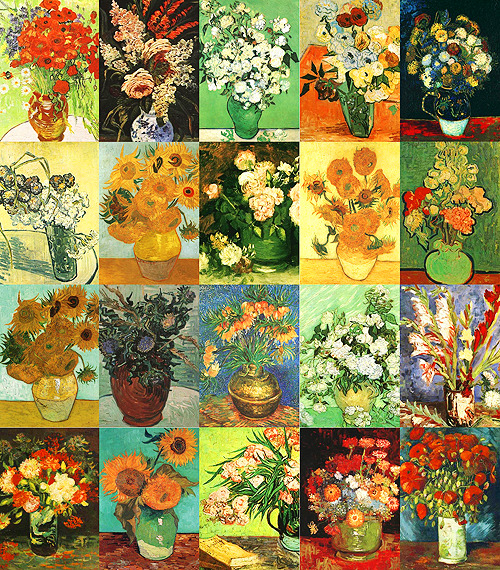
vincent
I wouldn't say I miss Tumblr, but I miss seeing stuff like this. (But it's not worth all the bullshit. Especially all the Doctor Who bullshit that will apparently be going on until, oh, 2016? JESUS, people)

Sunday, August 4, 2013
not my finest hour
LOOK
NOT ONLY DO I NOT CARE ABOUT WHO THE NEW DOCTOR IS
I WILL NEVER CARE
AND YOU CANNOT MAKE ME CARE
I AM LISTENING TO SCHUBERT AND PLANNING TO READ THOMAS MANN
SO FUCK Y'ALL AND THIS POP CULTURE STAND
NOT ONLY DO I NOT CARE ABOUT WHO THE NEW DOCTOR IS
I WILL NEVER CARE
AND YOU CANNOT MAKE ME CARE
I AM LISTENING TO SCHUBERT AND PLANNING TO READ THOMAS MANN
SO FUCK Y'ALL AND THIS POP CULTURE STAND
Saturday, August 3, 2013
books read in August 2013
Fiction is in red.
131. The Bat Tattoo, Russell Hoban
132. In the Shadow of the Magic Mountain: The Erika and Klaus Mann Story, Andrea Weiss
133. Slaughterhouse-Five, Kurt Vonnegut
134. Death in Venice, Thomas Mann (tr. Michael Henry Heim)
135. Hurry Down Sunshine, Michael Greenberg
136. Angels and Insects: Two Novellas, A.S. Byatt
137. Fraud: Essays, David Rakoff
138. Beg, Borrow, Steal: A Writer's Life, Michael Greenberg
139. The Meaning of Night, Michael Cox
140. After Her, Joyce Maynard (THIS, this is totally IT. This IS the worst book I have read all damn year)
141. A Train of Powder, Rebecca West
142. Katherine Mansfield: The Story-Teller, Kathleen Jones
143. Night Film, Marisha Pessl
144. Let Me Go, Chelsea Cain
145. Special Topics in Calamity Physics, Marisha Pessl
146. Flicker, Theodore Roszak
147. Oryx & Crake, Margaret Atwood
148. The Year of the Flood, Margaret Atwood
149. MaddAddam, Margaret Atwood
2013 booklist
131. The Bat Tattoo, Russell Hoban
132. In the Shadow of the Magic Mountain: The Erika and Klaus Mann Story, Andrea Weiss
133. Slaughterhouse-Five, Kurt Vonnegut
134. Death in Venice, Thomas Mann (tr. Michael Henry Heim)
135. Hurry Down Sunshine, Michael Greenberg
136. Angels and Insects: Two Novellas, A.S. Byatt
137. Fraud: Essays, David Rakoff
138. Beg, Borrow, Steal: A Writer's Life, Michael Greenberg
139. The Meaning of Night, Michael Cox
140. After Her, Joyce Maynard (THIS, this is totally IT. This IS the worst book I have read all damn year)
141. A Train of Powder, Rebecca West
142. Katherine Mansfield: The Story-Teller, Kathleen Jones
143. Night Film, Marisha Pessl
144. Let Me Go, Chelsea Cain
145. Special Topics in Calamity Physics, Marisha Pessl
146. Flicker, Theodore Roszak
147. Oryx & Crake, Margaret Atwood
148. The Year of the Flood, Margaret Atwood
149. MaddAddam, Margaret Atwood
2013 booklist
Friday, August 2, 2013
Jerry Vile and the giant fist

It didn’t take long for artist-provocateur Jerry Vile to get a reaction to the work he installed at the Joe Louis fist on Tuesday.
The Dirty Show founder and longtime Detroit gadfly placed a replica of a giant can of Crisco under the iconic monument at Hart Plaza, saying it was a commentary on Detroit’s bankruptcy — and no doubt hoping to get some attention.
It lasted there about seven hours before Detroit officials removed it. (source)
Now that's my kind of public art!
Best bit:
A representative from Detroit Mayor Dave Bing’s office confirmed with the Free Press Tuesday afternoon that city officials had removed it.
“After consulting with Detroit Institute of Arts officials, the City’s General Services Department removed the item left at the Joe Louis fist sculpture today as abandoned property,” the statement read.
“The department placed the item in storage and the artist may retrieve it if he wants.”
Thursday, August 1, 2013

"Operation Soul Retrieval," J.S.A. Lowe
Look, it doesn't appear—it seems to not be—we don't think it's
going very well. If the soul is a whorled coil, a cochlear shape
in the center of the abdomen, a blue-green curl somewhere
behind the bile duct, then all is well; but otherwise we feel
some concern that you have not got this more under control—
you needed to something, is our consensus, and failed to do it.
To lean over the edge of the pink sofa arm quick and give her
a stubbled cheek kiss, does such a gesture really pull the soul back
into the body after all her months away? Especially with this cold
rain, days of it, and no warmed adobe walls to draw her home?
When she can't feel her feet. When she can't even see the moon.
That, contrary to Californians and Klonopin, joy should be fugitive
after a certain age. That anyone's chest would froth with corrosive
bitterness, black and flaked like the oil pan from an old pickup truck.
Cups of tea aren't doing it. Or moping around the house holding
a tiny Kwan Yin figurine curled in your palm like a roll of quarters
in case you need to punch someone. We know how dumb it hurts.
We know you wake every morning in a state of lack, we are well
aware that before your eyes even open you feel insufficient all the way
to the brainstem. We know you've been running on fumes & charm
for perhaps a decade. It is what it is, to have failed her. And we want
to tell you: it's not so much that she needs to listen to the gods, it's that
you'd better make her talk back. These same mornings, a plain line
of sun glances toward the beds, makes translucent the pretty lettuces.
Tell her about this, urgently; don't just remind her about the time
you accidentally drove into Wales, and everything was greener
than green could have been, with bright red phone boxes in another
language—but promise you'll take her back there. Make claims
you can't support, agreements or liaisons impossible to keep.
A soul wants hope. A soul clambers down striped slits of light
through thin clouds in order to believe herself needed here.
Undivorce, repatriate, reconcile, solicit. Stock up on syntax
and semiotic coin, monger her loyalty with words if you have to.
Her warm skin can candle yours again. Her breath, her breast.
Inside your body lit up like rupestral figures on stone, granitic
thighs and spears, the pulse of running beasts. You can do this.
via
going very well. If the soul is a whorled coil, a cochlear shape
in the center of the abdomen, a blue-green curl somewhere
behind the bile duct, then all is well; but otherwise we feel
some concern that you have not got this more under control—
you needed to something, is our consensus, and failed to do it.
To lean over the edge of the pink sofa arm quick and give her
a stubbled cheek kiss, does such a gesture really pull the soul back
into the body after all her months away? Especially with this cold
rain, days of it, and no warmed adobe walls to draw her home?
When she can't feel her feet. When she can't even see the moon.
That, contrary to Californians and Klonopin, joy should be fugitive
after a certain age. That anyone's chest would froth with corrosive
bitterness, black and flaked like the oil pan from an old pickup truck.
Cups of tea aren't doing it. Or moping around the house holding
a tiny Kwan Yin figurine curled in your palm like a roll of quarters
in case you need to punch someone. We know how dumb it hurts.
We know you wake every morning in a state of lack, we are well
aware that before your eyes even open you feel insufficient all the way
to the brainstem. We know you've been running on fumes & charm
for perhaps a decade. It is what it is, to have failed her. And we want
to tell you: it's not so much that she needs to listen to the gods, it's that
you'd better make her talk back. These same mornings, a plain line
of sun glances toward the beds, makes translucent the pretty lettuces.
Tell her about this, urgently; don't just remind her about the time
you accidentally drove into Wales, and everything was greener
than green could have been, with bright red phone boxes in another
language—but promise you'll take her back there. Make claims
you can't support, agreements or liaisons impossible to keep.
A soul wants hope. A soul clambers down striped slits of light
through thin clouds in order to believe herself needed here.
Undivorce, repatriate, reconcile, solicit. Stock up on syntax
and semiotic coin, monger her loyalty with words if you have to.
Her warm skin can candle yours again. Her breath, her breast.
Inside your body lit up like rupestral figures on stone, granitic
thighs and spears, the pulse of running beasts. You can do this.
via
Subscribe to:
Posts (Atom)