I could have gone with the old standby, “the masculine embraces the feminine,” and just called everyone “he.” This is, in fact, the choice made by Ursula K LeGuin when she wrote The Left Hand of Darkness (Which is awesome, and if you haven’t read it, it is my considered opinion that you should.) Years later, she expressed some dissatisfaction with having made that choice. It made the Gethenians seem to be all male, which they were not, and failed to convey their non-binary nature.
There was, as I saw it, one more possibility–I could use “she” for everyone. This would have the same disadvantages as using “he” with the advantage of not being the oh-so-common masculine default.
....Problem solved. Pretty much. Except, my solution didn’t only fix my mechanical problem, it suddenly made the fact that there was a default visible. The thing about defaults is, they’re automatic. Most of the time you don’t even think about them. They just seem quite obvious and natural. Using an unusual default, particularly one that’s close to but not exactly like the usual one, really highlights the fact that there’s a default there to begin with. And suddenly neither my solution nor my initial problem seemed simple at all.
- Anne Leckie on her novel Ancillary Justice

descensus Averno facilis est
Tuesday, October 22, 2013
I may just see this documentary in a theatre....
....to stick it to Assange.
Another glaring hole in the Hollywood film is the allegations of the two women whose complaints resulted in sexual assault charges against Assange (they’re not broached in “The Fifth Estate”). As is far too common the case, the voices’ of these two victims were all but silenced amid the Wikileaks fanfare in real life; trumped up as honey traps and conspiracies meant to derail a politically unpalatable organization. This was no mistake. That’s exactly how Assange intended it. Perhaps the most galling of many revelations about Assange — beyond the multitude of “noble lies” and manipulations he orchestrates — is how he intentionally and unnecessarily co-mingled his personal legal battles with Wikileaks’ image to mislead the public for his own benefit and to the detriment of the Wikileaks cause. The live interview with one of the victims, Anna, and the backlash she faced is predictably heartbreaking.
- Do Yourself A Favor: See Wikileaks Documentary 'We Steal Secrets' Instead Of Hollywood's 'The Fifth Estate'
Another glaring hole in the Hollywood film is the allegations of the two women whose complaints resulted in sexual assault charges against Assange (they’re not broached in “The Fifth Estate”). As is far too common the case, the voices’ of these two victims were all but silenced amid the Wikileaks fanfare in real life; trumped up as honey traps and conspiracies meant to derail a politically unpalatable organization. This was no mistake. That’s exactly how Assange intended it. Perhaps the most galling of many revelations about Assange — beyond the multitude of “noble lies” and manipulations he orchestrates — is how he intentionally and unnecessarily co-mingled his personal legal battles with Wikileaks’ image to mislead the public for his own benefit and to the detriment of the Wikileaks cause. The live interview with one of the victims, Anna, and the backlash she faced is predictably heartbreaking.
- Do Yourself A Favor: See Wikileaks Documentary 'We Steal Secrets' Instead Of Hollywood's 'The Fifth Estate'
the silenced generation
You know, I read articles like this, and half of me wants to weep for her, and the other half is thinking bitterly: welcome to the fucking club. What I'd like to know is where was all this Grand Concern about college grads having to work at Whole Foods or Mickey D's when I graduated from college (92), and then from grad school (98)? Now that it's the Millennial brats of the Boomers who have to face a shitty economy with declining demand, suddenly it's a Terrible Thing. We were the slackers, the twentynothings, the wastoids, the irony addicts stoned on our own apathy. Supposedly. If we didn't have great jobs and health insurance and starter homes, it must be because we didn't truly want them. Because obviously if we had wanted them, we would have worked hard enough. Every single cultural analysis I've ever seen still refers to the Clinton terms as "the boom years." Even Packer in The Unwinding. No, not for everyone....but apparently, it was a boom for the people who mattered.
I was in the 99% before it was trendy! //hipster
I was in the 99% before it was trendy! //hipster
Monday, October 21, 2013

divine felines
If current trends continue, in just a few years all of contemporary
culture will be nothing but an unending stream of cat pictures.
Newspapers desperate to survive will publish only adorable kitten photos;
social networks will strain under the weight of shorthairs and Siamese.
The art world is already getting in on the act: witness the Walker Art
Museum in Minneapolis hosting an internet cat video festival (it drew 10,000 viewers in one day), or White Columns, the avant-garde New York gallery, laying on The Cat Show, featuring "purr-formers in residence".
- The Grauniad
- The Grauniad
RESTORED WICKER MAN TRAILER YESSS
(There was a delightfully snarky website ((of course I can't find it now)) which once wrote, "It is often called the Citizen Kane of horror films, but no one calls Citizen Kane the Wicker Man of mainstream films...." And there are some great filming details, like this:)
"Autumn" was turned into "summer" by employing fake plastic apple trees and by decorating the real bare trees with imitation blossom. Locals were recruited to fill out the crowd scenes, and pupils from a ballet school helped with some of the dance routines – everybody being kept warm with industrial fan heaters.
Robin Hardy, director: The final scene, the sacrifice, took place in Dumfriesshire. The wicker man was enormous. The stunned look on Howie's face when he first sees it wasn't acting – up until then, Edward had only seen drawings. He clambered in and we set it on fire, filming from the inside. There was a goat inside there, above us. Understandably concerned about the fire, it pissed on us.
....any extra inanity just adds to the film's overall phantasmagorical weirdness. I mean, this is a film where Christopher Lee spouts odd Pagan poetry over lovingly photographed snails intertwined in the act of mating. And yes, those snails, like the talk of apples, are there for well-calculated reasons.
the passing tense
Walking the streets of New York City, I was amazed and baffled and somewhat horrified at the percentage of people strolling blithely along with their attention on their "mobile devices." At least a third, minimum, in any crowd, at any given time. When and how did this happen? And I had two thoughts that I paused to write down (pencil, paper):
~ How can there be a future when all moments are compacted into the present?
~ In a state of perpetual communication, how can there be reflection?
- Caitlin R. Kiernan
(This is one of the many reasons I don't have an iThing. Well, that and I'm broke. Probably mostly because I'm broke. But even were I not broke, shelling out $600+ for a shiny distraction device is....so not me.)
(Also I got endless shit from people while growing up for walking and reading at the same time! Now that's what EVERYONE is doing. Sort of.)
~ How can there be a future when all moments are compacted into the present?
~ In a state of perpetual communication, how can there be reflection?
- Caitlin R. Kiernan
(This is one of the many reasons I don't have an iThing. Well, that and I'm broke. Probably mostly because I'm broke. But even were I not broke, shelling out $600+ for a shiny distraction device is....so not me.)
(Also I got endless shit from people while growing up for walking and reading at the same time! Now that's what EVERYONE is doing. Sort of.)
Sunday, October 20, 2013
just bought his book, paid real money for it and everything
Packer on Trollope and modern times:
....When Brehgert proposes to a young Englishwoman who’s overestimated her own worth for too many years to be picky, the reaction is nearly universal horror, but she’s more pragmatic: as long as the man is rich, why should anyone care about his religion? Greed can be the leading wedge of freedom.
Something similar is true of the glittering capital of an American empire perched on a speculative bubble. There’s no limit to the money accumulating at the top of New York (and other centers of wealth), no limit to the fascination it exercises over the rest of the country. Every time it seems as if the tide of fantastic wealth is going out—after 2008 was the most recent moment—it surges back, higher than ever. Greed is eternal, but when the money flows as plentifully upward as in London circa 1873 or New York circa 2013, and is as unequally distributed, it becomes a moral toxin, saturates the world of culture, makes relationships more competitive, turns desire into the pursuit of status, replaces solid things with mirages.
Finished The Unwinding, which was pretty fucking awesome (yeah, I didn't like how he wrote about Oprah or Alice Waters, and there aren't enough female characters in the "unknown" profiles either -- on the other hand, his portrayal of Tammy Thomas, being as resolutely heroic as three firemen just "doing what she needed to do," repeatedly made me cry); zapped over to Amazon, yes please do deliver some bits (bytes?) to my Paperwhite for under $10, now immediately on to Interesting Times. Brave new library. This is what I do instead of watching TV (it's also now what I do instead of updating GoodReads. Hi ho).
Ireally sort of love* this guy -- eagle-sharp vision, a gift for style, and right there with the 'telling detail' every time. The "Tampa" chapters in Unwinding were terrifying yet riveting -- a real horror show, never mind all that Supernatural/Hannibal TV crap.
*Trying to de-Gawkerize/un-Awlify my online style, bear with me.
....When Brehgert proposes to a young Englishwoman who’s overestimated her own worth for too many years to be picky, the reaction is nearly universal horror, but she’s more pragmatic: as long as the man is rich, why should anyone care about his religion? Greed can be the leading wedge of freedom.
Something similar is true of the glittering capital of an American empire perched on a speculative bubble. There’s no limit to the money accumulating at the top of New York (and other centers of wealth), no limit to the fascination it exercises over the rest of the country. Every time it seems as if the tide of fantastic wealth is going out—after 2008 was the most recent moment—it surges back, higher than ever. Greed is eternal, but when the money flows as plentifully upward as in London circa 1873 or New York circa 2013, and is as unequally distributed, it becomes a moral toxin, saturates the world of culture, makes relationships more competitive, turns desire into the pursuit of status, replaces solid things with mirages.
Finished The Unwinding, which was pretty fucking awesome (yeah, I didn't like how he wrote about Oprah or Alice Waters, and there aren't enough female characters in the "unknown" profiles either -- on the other hand, his portrayal of Tammy Thomas, being as resolutely heroic as three firemen just "doing what she needed to do," repeatedly made me cry); zapped over to Amazon, yes please do deliver some bits (bytes?) to my Paperwhite for under $10, now immediately on to Interesting Times. Brave new library. This is what I do instead of watching TV (it's also now what I do instead of updating GoodReads. Hi ho).
I
*Trying to de-Gawkerize/un-Awlify my online style, bear with me.
Andrew Bird, "Orpheo Looks Back"
from the "Here's What Happened" film, deluxe CD of Break It Yourself.

Saturday, October 19, 2013
what an actual critic (with both a brain and a vocabulary) writing about Alice Munro looks like
Fate is another of the ancient preoccupations that Munro revives in a modern
setting: the way human beings find meaning in sequences of seemingly random
events, or come to believe, retrospectively or projectively, that their
lives are following a preordained pattern. Munro’s narrative technique is
subversive of any such conviction. Her stories proceed through hiatus and
interruption. She lays down discrete blocks of narrative within each story,
like stepping stones, requiring her reader to jump trustingly from one to
another, until some surprising destination or other has been reached. These
gaps are what account, in part, for the sense of interpretive freedom that
her texts convey: their spaciousness and openness to the unexplained or
unexplainable. The reader who is tempted to look up from one of Munro’s
stories and ask: “But where is all this going, what does it mean?” should
remember Edith doing her Latin homework at the kitchen table at the end of
“Hateship, Friendship, Courtship, Loveship, Marriage”:
“Tu ne quaesieris, scire nefas, quem mihi, quem tibi – ‘You must not ask, it is forbidden for us to know –’ She paused, chewing her pencil, then finished off with a chill of satisfaction, ‘– what fate has in store for me, or for you –’ ”
- Ruth Scurr, "The Darkness of Alice Munro," TLS 2011
“Tu ne quaesieris, scire nefas, quem mihi, quem tibi – ‘You must not ask, it is forbidden for us to know –’ She paused, chewing her pencil, then finished off with a chill of satisfaction, ‘– what fate has in store for me, or for you –’ ”
- Ruth Scurr, "The Darkness of Alice Munro," TLS 2011
linkses
Jeanette Winterson on Oscar Wilde's fairy tales:
Wilde had a streak of prophecy in him. The children's stories can be read as notes from the future about Wilde's fate. It is as though the little child in him was trying to warn him of the dangers his adult self would soon face. "Every single work of art is the fulfilment of a prophecy", he writes in "De Profundis".
(One of the few good things about the mysteriously-DOA Wilde starring Stephen Fry was its framing device, voiceover narration from "The Selfish Giant." Intriguingly, Wilde's wife Constance might have helped write it.)
Her Brilliant Career: Ten Extraordinary Women of the Fifties by Rachel Cooke:
So, though we're used to reading about the lives of the great artists, writers and thinkers, this book is not about them. On the other hand, though we're increasingly drawn to what Woolf called "infinitely obscure lives" that "remain to be recorded", this is not a project of recovery. The idea, appealingly, is to think about women who became well-known for being terrifically good at what they did. They were professional pioneers of the 1950s, respected by their peers and remembered admiringly, perhaps not by millions, but certainly by those working in related fields. They were all career women when that was rare, and today's working women are in their debt.
Prehistoric cave prints show most early artists were women. A friend of mine dryly commented that now of course various scientists and art critics will re-evaluate the cave drawings as lesser -- or, dare we say, even as "chicks sitting around thinking about how they feel about their relatives"?
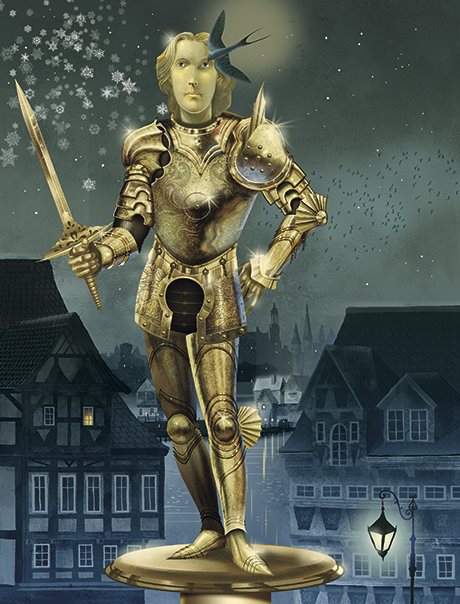
That Winterson piece also has a gorgeous illustration of Wilde as his fairytale character the Happy Prince by Grahame Baker-Smith:

And a late-breaking addition: We also had, on Gloucester Road, a Partridge’s store that sold all the American foods I missed: Skippy peanut butter, Toll House chocolate chips, breakfast cereals consisting mostly of fluorescent marshmallows.
are you fucking kidding me
(Best dry comment: "I still say that Americans should be given a simple test before they are issued a passport. If peanut butter is essential to their well-being, they (and the host country) would be a lot happier with their staying home.")
#seriously #are you kidding me #oh my God you went to London #and ate peanut butter #and got paid by the NYT to write about it #so angry resorting to hashtags #Tumblritis
Wilde had a streak of prophecy in him. The children's stories can be read as notes from the future about Wilde's fate. It is as though the little child in him was trying to warn him of the dangers his adult self would soon face. "Every single work of art is the fulfilment of a prophecy", he writes in "De Profundis".
(One of the few good things about the mysteriously-DOA Wilde starring Stephen Fry was its framing device, voiceover narration from "The Selfish Giant." Intriguingly, Wilde's wife Constance might have helped write it.)
Her Brilliant Career: Ten Extraordinary Women of the Fifties by Rachel Cooke:
So, though we're used to reading about the lives of the great artists, writers and thinkers, this book is not about them. On the other hand, though we're increasingly drawn to what Woolf called "infinitely obscure lives" that "remain to be recorded", this is not a project of recovery. The idea, appealingly, is to think about women who became well-known for being terrifically good at what they did. They were professional pioneers of the 1950s, respected by their peers and remembered admiringly, perhaps not by millions, but certainly by those working in related fields. They were all career women when that was rare, and today's working women are in their debt.
Prehistoric cave prints show most early artists were women. A friend of mine dryly commented that now of course various scientists and art critics will re-evaluate the cave drawings as lesser -- or, dare we say, even as "chicks sitting around thinking about how they feel about their relatives"?
That Winterson piece also has a gorgeous illustration of Wilde as his fairytale character the Happy Prince by Grahame Baker-Smith:
And a late-breaking addition: We also had, on Gloucester Road, a Partridge’s store that sold all the American foods I missed: Skippy peanut butter, Toll House chocolate chips, breakfast cereals consisting mostly of fluorescent marshmallows.
are you fucking kidding me
(Best dry comment: "I still say that Americans should be given a simple test before they are issued a passport. If peanut butter is essential to their well-being, they (and the host country) would be a lot happier with their staying home.")
#seriously #are you kidding me #oh my God you went to London #and ate peanut butter #and got paid by the NYT to write about it #so angry resorting to hashtags #Tumblritis
why does Laura Miller have a book-reviewing job?
From Salon:
Munro writes what many people refer to (scornfully) as classic New-Yorker-style short stories. They’re naturalistic fiction about the domestic and personal relationships of very ordinary people, usually women, most of them born and raised in provincial Canadian towns. I freely admit that this sounds fantastically boring, and even when a writer friend I respected deeply gave me a copy of “Friend of My Youth” many years ago, I neglected to give Munro a try. The short story form (in prospect, at least) has never appealed to me, and after a dire childhood encounter with “Little Women” — foisted on me by female relatives — I developed a lifelong resistance to fiction in which, as my teenage self once put it, “people just sit around thinking about how they feel about their relatives.”
.....wow, that's not what Little Women is about, for one thing (Home Front war stories? American history? One of the few Bildungsromans about a young female author we have, period? Need I go on?). And a novel written by a female author in the mid-nineteenth century is totally just the same as short stories written by a female author in the late twentieth century! Women writers, all the same, engrossed in their little pieces of ivory and lace-making and visiting cards, right? Massachusetts is practically Canada anyway!
If I felt like it I could sum up, say, Thomas Mann's Buddenbrooks, speaking of getting Germanic, as "people just sitting around thinking about how they feel about their relatives," but I won't.
(Hot damn, this could be a new genre of literary criticism. Ulysses: "A man just sits around thinking about how he feels about his wife." Lolita: "A man just sits around thinking about how he feels about a young girl." Portnoy's Complaint: "A man just sits around thinking about how he feels about women. Lots of women." And so on.)
I would say something about a highly-ranked female literary critic feeling the need to somehow entice us into reading a female Nobel Prize winner (like the Nobel Prize won't do that all by its lonesome?) by bashing another female author using some of the most sexist cliches about female writers ("boring," "provincial," "ordinary," "domestic," "feelings," "relatives") but it's too depressing. And enraging. And predictable. Really, this piece isn't saying much more than "So you might have thought Alice Munro was boring, hunh? I did too. But then I wised up! And look, Salon is on record as publishing me over a decade ago being wise about Alice Munro. So read her! Like me." Because really, what we need to know about Alice Munro winning the Nobel is....that Laura Miller thought she was worth reading before that.
(Did....anyone think Alice Munro was like Louisa May Alcott? No, no, not Laura Miller, smartasses. Besides her.)
So instead of actually writing anything about Munro this piece is....Nobel-Prize-propelled clickbait for a review from 2001. Why are so many magazines doing this right now? Is it really that hard to generate new content nowadays? Shit, give me a Salon.com byline and I'll produce a whole new piece about Munro for nothing but love! I won't mention my former reviews or my respected writer friends or my adolescent tastes even once!
.....then again, if "people just sitting around thinking about how they feel about their relatives" is a sample of Miller's critical thinking skills, or lack thereof, maybe we're lucky she's not writing new reviews. Dodged a bullet there, Alice.
Munro writes what many people refer to (scornfully) as classic New-Yorker-style short stories. They’re naturalistic fiction about the domestic and personal relationships of very ordinary people, usually women, most of them born and raised in provincial Canadian towns. I freely admit that this sounds fantastically boring, and even when a writer friend I respected deeply gave me a copy of “Friend of My Youth” many years ago, I neglected to give Munro a try. The short story form (in prospect, at least) has never appealed to me, and after a dire childhood encounter with “Little Women” — foisted on me by female relatives — I developed a lifelong resistance to fiction in which, as my teenage self once put it, “people just sit around thinking about how they feel about their relatives.”
.....wow, that's not what Little Women is about, for one thing (Home Front war stories? American history? One of the few Bildungsromans about a young female author we have, period? Need I go on?). And a novel written by a female author in the mid-nineteenth century is totally just the same as short stories written by a female author in the late twentieth century! Women writers, all the same, engrossed in their little pieces of ivory and lace-making and visiting cards, right? Massachusetts is practically Canada anyway!
If I felt like it I could sum up, say, Thomas Mann's Buddenbrooks, speaking of getting Germanic, as "people just sitting around thinking about how they feel about their relatives," but I won't.
(Hot damn, this could be a new genre of literary criticism. Ulysses: "A man just sits around thinking about how he feels about his wife." Lolita: "A man just sits around thinking about how he feels about a young girl." Portnoy's Complaint: "A man just sits around thinking about how he feels about women. Lots of women." And so on.)
I would say something about a highly-ranked female literary critic feeling the need to somehow entice us into reading a female Nobel Prize winner (like the Nobel Prize won't do that all by its lonesome?) by bashing another female author using some of the most sexist cliches about female writers ("boring," "provincial," "ordinary," "domestic," "feelings," "relatives") but it's too depressing. And enraging. And predictable. Really, this piece isn't saying much more than "So you might have thought Alice Munro was boring, hunh? I did too. But then I wised up! And look, Salon is on record as publishing me over a decade ago being wise about Alice Munro. So read her! Like me." Because really, what we need to know about Alice Munro winning the Nobel is....that Laura Miller thought she was worth reading before that.
(Did....anyone think Alice Munro was like Louisa May Alcott? No, no, not Laura Miller, smartasses. Besides her.)
So instead of actually writing anything about Munro this piece is....Nobel-Prize-propelled clickbait for a review from 2001. Why are so many magazines doing this right now? Is it really that hard to generate new content nowadays? Shit, give me a Salon.com byline and I'll produce a whole new piece about Munro for nothing but love! I won't mention my former reviews or my respected writer friends or my adolescent tastes even once!
.....then again, if "people just sitting around thinking about how they feel about their relatives" is a sample of Miller's critical thinking skills, or lack thereof, maybe we're lucky she's not writing new reviews. Dodged a bullet there, Alice.
Friday, October 18, 2013
Suspiria de Profundis
Therefore it is that Levana often communes with the powers that shake a man`s heart: therefore it is that she dotes on grief. "These ladies," said I softly to myself, on seeing the ministers with whom Levana was conversing, "these are the Sorrows; and they are three in number, as the Graces are three, who dress man`s life with beauty; the Parcoe are three, who weave the dark arras of man`s life in their mysterious loom, always with colours sad in part, sometimes angry with tragic crimson and black; the Furies are three, who visit with retribution called from the other side of the grave offences that walk upon this; and once even the Muses were but three, who fit the harp, the trumpet, or the lute, to the great burdens of man`s impassioned creations. These are the Sorrows, all three of whom I know."
- Thomas de Quincey
- Thomas de Quincey
'In other words, your average Pinterest board or inspiration Tumblr basically functions as a longing machine.'
“Curation” does imply something far more deliberate than these
inspiration blogs, whose very point is to put the viewer into an
aesthetic reverie unencumbered by thought or analysis. These sites are
not meant (as curation is) to make us more conscious, but less so. That
might be O.K., but it also means they have a lot more in common with
advertising than they do with curation. After all, advertising trains us
to keep our desire always at the ready, nurturing that feeling that
something is missing, then redirecting it toward a tangible product. In
the end, all that pent-up yearning needs a place to go, and now it has
that place online. But products are no longer the point. The feeling is
the point. And now we can create that feeling for ourselves, then pass
it around like a photo album of the life we think we were meant to have
but don’t, the people we think we should be but aren’t.
- Carina Chocano
- Carina Chocano

AUGH
WHY, RSC, WHY
WHY YOU DO THIS TO DAVID TENNANT IN ONE OF MY FAVOURITE PLAYS BY WILL


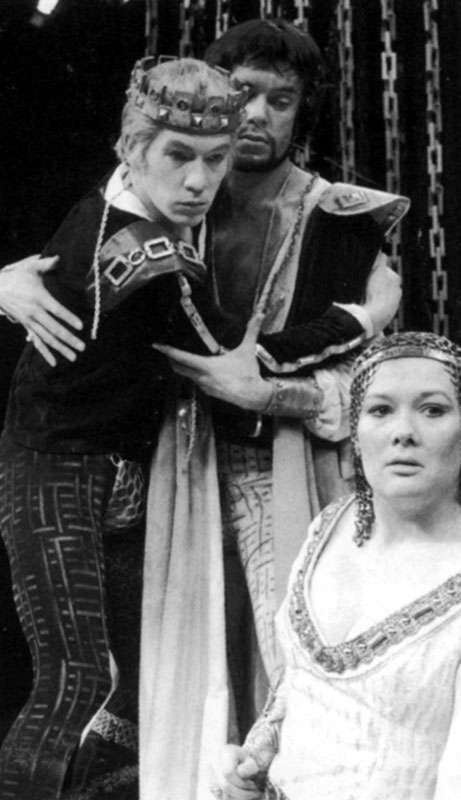
Those are some of the worst costuming decisions I have seen in A WHILE, and I'm not just talking about Dickon there. Why is everyone draped in burlap? Why does the armor look so, so....what the hell is Aumerle wearing in that, it looks like a bathrobe and hoodie over a sleep T-shirt, my God. And did they have no money to spend on a goddamn set? Or even proper lighting?
This is worse than the completely distracting costumes McKellen wore in Edward II and you know, that was 1970, plus at least McKellan wasn't topped off with what someone managed to wrangle out of Farrah Fawcett's 1978 Avon brush set. Christ almighty.

WHY YOU DO THIS TO DAVID TENNANT IN ONE OF MY FAVOURITE PLAYS BY WILL


Those are some of the worst costuming decisions I have seen in A WHILE, and I'm not just talking about Dickon there. Why is everyone draped in burlap? Why does the armor look so, so....what the hell is Aumerle wearing in that, it looks like a bathrobe and hoodie over a sleep T-shirt, my God. And did they have no money to spend on a goddamn set? Or even proper lighting?
This is worse than the completely distracting costumes McKellen wore in Edward II and you know, that was 1970, plus at least McKellan wasn't topped off with what someone managed to wrangle out of Farrah Fawcett's 1978 Avon brush set. Christ almighty.
Thursday, October 17, 2013
D’Aulaires’ Babies
As children, we tend to remember particular versions of myths as if they
were the definitive ones, only later to discover that there is no such
thing as an “original” myth or fairy tale, but, instead, thousands of
variations passed down through literature and oral tradition. I first
read about Orpheus in “D’Aulaires’ Book of Greek Myths,” a sumptuously
illustrated book that I pored over nightly. In that book’s version of
the story, “the fluttering souls hushed” when Orpheus entered the realm
of the dead and begged for his bride. Even “Hades, the pitiless king of
the dead … was so moved by the music that tears rolled down his sallow
cheeks.” As a child, I never understood why Orpheus doubted Hades’s
promise to send Eurydice back to the world behind him—the pitiless king
had wept, after all, upon hearing Orpheus’s music. But my confusion at
Orpheus’s faltering was quickly replaced by horror when the Dionysian
nymphs entered the scene, yelling and wild. “The river stopped its
gurgling to listen,” the d’Aulaires write, “for the haunting voice of
Orpheus still issued forth from his dead lips when he floated down to
the open sea.” Thus the story of Orpheus was imprinted upon me....
- Kate Bernheimer

- Kate Bernheimer

Yesterday....
Oscar Wilde was born (1854), and Jane Eyre was first published (1847)! Now those are two pretty damn awesome events.


Wednesday, October 16, 2013

Neil Gaiman on reading
Fiction has two uses. Firstly, it's a gateway drug to reading. The drive
to know what happens next, to want to turn the page, the need to keep
going, even if it's hard, because someone's in trouble and you have to
know how it's all going to end … that's a very real drive. And it forces
you to learn new words, to think new thoughts, to keep going. To
discover that reading per se is pleasurable. Once you learn that, you're
on the road to reading everything. And reading is key. There were
noises made briefly, a few years ago, about the idea that we were living
in a post-literate world, in which the ability to make sense out of
written words was somehow redundant, but those days are gone: words are
more important than they ever were: we navigate the world with words,
and as the world slips onto the web, we need to follow, to communicate
and to comprehend what we are reading. People who cannot understand each
other cannot exchange ideas, cannot communicate, and translation
programs only go so far.
- via
- via
reading - Wednesday!
What did you just finish reading?
Flamethrowers - was not that great, mostly because way too much of it was about the early eighties New York art scene of macho assholes, i.e. warmed-over Tama Janowitz, and I wasn't that big a fan of Tama when she was piping hot as a New York street pizza. The chapters about the narrator growing up in NV and seeing revolutionaries in Rome were great, though. I would have happily read many pages about Italy in the early eighties. I can tolerate assholes if they're Rothko or Cornell, but NYC too-hip-for-the-gallery art-as-performance just bores me. Also, Dwight Garner praised the dialogue, which BAFFLED me, because people go on far too long in a far too literary manner. One guy tells a terrible story at a DINNER PARTY which goes on for, I shit you not, about ten pages. It's like he thinks he's in Atlas Shrugged.
Cartwheel - was really good! You see from everyone's quite distinct POV except two major characters, which seemed off as I went along but then was explained basically by Plot Reasons near the end, but other than that, the pieces were really nicely joined together. The writing itself was very good, often terribly funny, especially the smartass quips of a damaged hipster boy grieving for his parents. The story is about how learning to see outside yourself is crucial to empathy, which sounds ABC After-School-Special-ish but was very well-done, and the book is partly an exercise in empathy itself -- everyone is 'sympathetic' (not likeable, or, God help us all, someone to root for): the accused, the murder victim, the parents, the prosecutor. Unlike Flamethrowers the dialogue in this book sounded like words spoken by real people. duBois wobbled a little on the did-she-or-didn't-she question, but the book was grounded enough in the mystery of real human experience, if that makes sense, that it wasn't annoying. More a literary novel about a crime than anything with genre trappings, which was fine. About the idea of dangerous American innocence, 'arrogant naivete' - the old Jamesian question I guess. But written in sentences you can actually read.
Room with a View - oy. Still not clicking for me, all these years later. It's like seeing an old college acquaintance at the ten-year reunion lunch and realizing you still detest them. I had to pretend this was maybe written by very early Virginia Woolf, because otherwise it sounded terribly arch. Lady Bracknell picks up a pen. And weirdly misogynistic, in a way (not anything specific -- it just sort of kept putting my hackles up). However, this was pretty well redeemed by having Emerson the Younger be a Manic Sparkle Pixie Dreamguy for Lucy (I adore Lucy). I have read some weird literary criticism about Lucy being a female authorial self-insert, and didn't Forster say he would no longer write fiction because he couldn't write het romance, and then we go off on the question of empathy again, and what about trying to write outside yourself? but at what point does denial of your own experience in order to conform to expectations, literary and social, become too creatively stifling? -- and would David Gilmour call Forster a Manly Man? Now that is really what we all want to know.
What are you reading now?
A truly terrible true-crime book about Amanda Knox.
No, really.
What do you expect to read next?
Another truly terrible true-crime book about Amanda Knox.
No, really. -- I know, I know. It's a sickness.
Flamethrowers - was not that great, mostly because way too much of it was about the early eighties New York art scene of macho assholes, i.e. warmed-over Tama Janowitz, and I wasn't that big a fan of Tama when she was piping hot as a New York street pizza. The chapters about the narrator growing up in NV and seeing revolutionaries in Rome were great, though. I would have happily read many pages about Italy in the early eighties. I can tolerate assholes if they're Rothko or Cornell, but NYC too-hip-for-the-gallery art-as-performance just bores me. Also, Dwight Garner praised the dialogue, which BAFFLED me, because people go on far too long in a far too literary manner. One guy tells a terrible story at a DINNER PARTY which goes on for, I shit you not, about ten pages. It's like he thinks he's in Atlas Shrugged.
Cartwheel - was really good! You see from everyone's quite distinct POV except two major characters, which seemed off as I went along but then was explained basically by Plot Reasons near the end, but other than that, the pieces were really nicely joined together. The writing itself was very good, often terribly funny, especially the smartass quips of a damaged hipster boy grieving for his parents. The story is about how learning to see outside yourself is crucial to empathy, which sounds ABC After-School-Special-ish but was very well-done, and the book is partly an exercise in empathy itself -- everyone is 'sympathetic' (not likeable, or, God help us all, someone to root for): the accused, the murder victim, the parents, the prosecutor. Unlike Flamethrowers the dialogue in this book sounded like words spoken by real people. duBois wobbled a little on the did-she-or-didn't-she question, but the book was grounded enough in the mystery of real human experience, if that makes sense, that it wasn't annoying. More a literary novel about a crime than anything with genre trappings, which was fine. About the idea of dangerous American innocence, 'arrogant naivete' - the old Jamesian question I guess. But written in sentences you can actually read.
Room with a View - oy. Still not clicking for me, all these years later. It's like seeing an old college acquaintance at the ten-year reunion lunch and realizing you still detest them. I had to pretend this was maybe written by very early Virginia Woolf, because otherwise it sounded terribly arch. Lady Bracknell picks up a pen. And weirdly misogynistic, in a way (not anything specific -- it just sort of kept putting my hackles up). However, this was pretty well redeemed by having Emerson the Younger be a Manic Sparkle Pixie Dreamguy for Lucy (I adore Lucy). I have read some weird literary criticism about Lucy being a female authorial self-insert, and didn't Forster say he would no longer write fiction because he couldn't write het romance, and then we go off on the question of empathy again, and what about trying to write outside yourself? but at what point does denial of your own experience in order to conform to expectations, literary and social, become too creatively stifling? -- and would David Gilmour call Forster a Manly Man? Now that is really what we all want to know.
What are you reading now?
A truly terrible true-crime book about Amanda Knox.
No, really.
What do you expect to read next?
Another truly terrible true-crime book about Amanda Knox.
No, really. -- I know, I know. It's a sickness.
Tuesday, October 15, 2013
from 'The Tutelage of Charlotte and Emily Brontë' (Harper's)
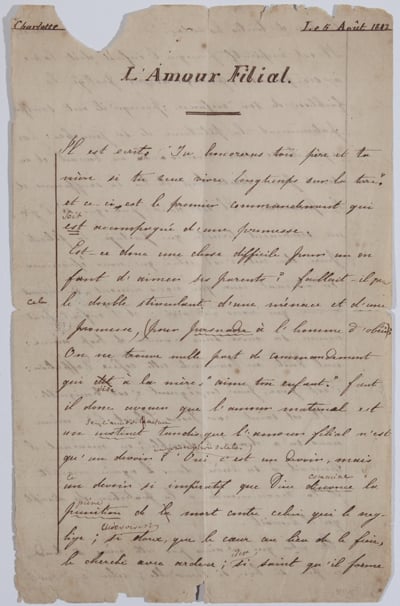
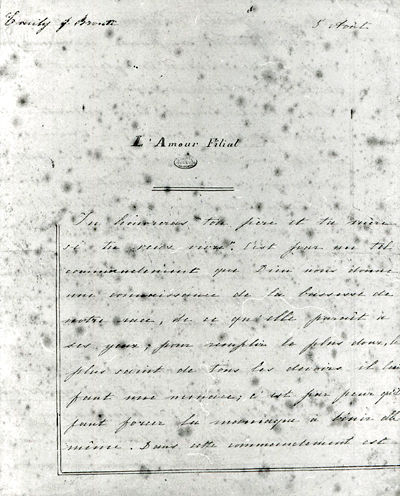
The most obvious difference between the two manuscripts is that Emily’s
is free of corrections by Heger, while his markings appear on all three
pages of Charlotte’s essay, so that, between the lines, a master–pupil
dynamic emerges. In 1856, he told Elizabeth Gaskell, the novelist who
was writing Charlotte’s biography, that he “rated Emily’s genius as
something even higher than Charlotte’s.” Still, throughout the months
both sisters spent at the pensionnat, Heger paid much more attention to
Charlotte’s work, possibly because, unlike her disaffected sibling, she
responded with flattering compliance. The more he critiqued and
corrected her writing, the more she attempted to please him. (As she
later wrote in a poem, “Obedience was my heart’s free choice/ Whate’er
his word severe.”)
- Sue Lonoff de Cuevas
- Sue Lonoff de Cuevas


Monday, October 14, 2013
still seething about Dwight Garner
This summary is not available. Please
click here to view the post.
Subscribe to:
Posts (Atom)